Kikuchi Reo: A Weaver of Echoes
Kikuchi Reo, born in Hadano, Japan, on January 6th, 1981, is a compelling figure in contemporary Japanese art – an actress whose career has seamlessly transitioned into a celebrated visual artist. Initially known as Yuriko Kikuchi, she adopted the name Reo Kikuchi, reflecting a deliberate shift and embracing of her artistic identity. Her journey began with a stage presence, gaining international recognition for her nuanced performance as Chieko in Sofia Coppola’s ‘Babel’ (2006), an experience that earned her a nomination for the Academy Award for Best Supporting Actress. This early success laid the groundwork for a multifaceted career encompassing acting, directing, producing, and writing – all while simultaneously developing a distinctive artistic voice. Reo Kikuchi's work isn’t simply about representation; it’s a profound exploration of perception, memory, and the very act of seeing itself.
Early Artistic Foundations & Tokyo Zokei University
Kikuchi’s artistic trajectory solidified during her studies at Tokyo Zokei University. She earned both a Bachelor of Arts (B.A.) in Painting (2015) and a Master of Arts (M.A.) degree in Painting (2017), followed by a Doctor of Philosophy (Ph.D.) from the same institution in 2020. This rigorous academic foundation provided her with a deep understanding of traditional Japanese painting techniques, while simultaneously fostering an experimental approach to contemporary art practices. Her time at Tokyo Zokei University was marked by several significant exhibitions, including “non/(division)” (2017), showcasing her early explorations of division and fragmentation, and “OUTLINES” (2019), a powerful series that directly addressed the concept of boundaries – both physical and conceptual. These early works hinted at the thematic concerns that would become central to her later practice: the interplay between representation and abstraction, memory and perception.
A Shift Towards Conceptual Painting & Historical Echoes
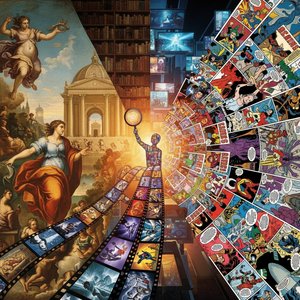
Kikuchi’s artistic development took a pivotal turn when she began to incorporate elements of historical painting imagery into her work. Rather than replicating these images directly, she meticulously deconstructs them – dissecting their composition, color palettes, and underlying narratives. This process isn't about homage; it’s an interrogation. As she herself describes, her interest lies not in the technical mastery of traditional painting but in “how we perceive and interact with images.” Her work frequently references iconic Western paintings, transforming them into something entirely new – a series of fragmented echoes that challenge our assumptions about art history and visual representation. This approach is powerfully evident in pieces like "Distance to image," where she juxtaposes elements from classical works with contemporary materials, creating a dialogue between the past and present.
Notable Achievements & Current Exhibitions
Reo Kikuchi’s artistic career has garnered considerable recognition within Japan and internationally. She's been featured in numerous group exhibitions at prestigious venues like EUKARYOTE, Holbein Art Fair, and SHIBUYA SCRAMBLE SQUARE, demonstrating a commitment to both established institutions and innovative spaces. Her work has been recognized with awards such as the 33rd Holbein Scholarship (2019) and the ZOKEI Award (2017), acknowledging her significant contribution to contemporary Japanese art. Currently, she continues to exhibit her compelling reinterpretations of historical imagery, exploring themes of memory, perception, and the nature of seeing. Her work is currently showcased at Shikisaisha Gallery, where it invites viewers to contemplate the enduring power of visual representation.
The Essence of Reo Kikuchi’s Vision
At its core, Reo Kikuchi's art is a meditation on the act of looking. She isn’t simply creating beautiful images; she’s prompting us to question *how* we see and *what* we perceive. Her process—reconstructing historical paintings through layers of abstraction and fragmentation—forces a confrontation with our own ingrained visual habits. In an age dominated by digital imagery and AI-generated visuals, Kikuchi's work serves as a vital reminder that the act of seeing is not passive but actively constructed – shaped by memory, context, and individual interpretation. Her art invites us to step back from the surface and consider the deeper questions about representation, perception, and the very nature of reality.