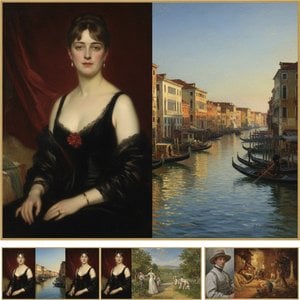
John Moir (c.1776–1857): A Visionary Landscape Painter of Northumberland
John Moir was born around 1776 in Peterhead, Aberdeenshire, Scotland—the son of the minister of Peterhead and the nephew of James Byres, the famed Scottish antiquarian residing in Rome. His formative years were marked by a profound connection to the rugged beauty of Northumberland, an influence that would permeate his artistic endeavors throughout his life. Early indications suggest he studied at King’s College, Aberdeen, honing his skills before embarking on a journey into Italy where he immersed himself in classical art and aesthetics. This exposure undoubtedly shaped his compositional sensibilities and fueled his desire to capture the grandeur of the natural world with meticulous detail.- Early Life & Education: Moir’s upbringing instilled in him a deep appreciation for both religious faith and scholarly pursuits, providing a foundation for his intellectual curiosity and artistic development.
- Italian Influences: His time in Italy proved pivotal, exposing him to the techniques of Venetian landscape painters like Canaletto and influencing his approach to perspective and tonal gradation—elements that would become hallmarks of his distinctive style.
The Landscape Painter’s Technique
Moir's artistic technique was characterized by a dedication to realism combined with an expressive use of color and light. He meticulously observed the subtleties of Northumberland’s topography, painstakingly rendering mountains, valleys, and rivers with remarkable accuracy. However, he didn’t merely aim for photographic representation; rather, he sought to convey the emotional impact of these landscapes—the serenity of twilight skies, the drama of stormy weather, and the vibrant hues of autumnal foliage. His brushstrokes were deliberate and considered, layering pigments to achieve depth and luminosity that captured the essence of Northumberland's atmosphere. He frequently employed a glazing technique, applying thin washes of color over underlayers to build up tonal variations and create shimmering effects—a method favored by many Northern Romantic painters.- Glazing Technique: This layering process allowed Moir to achieve remarkable depth and luminosity, mirroring the atmospheric conditions he sought to depict.
- Color Palette: His palette leaned heavily on earthy tones—greens, browns, ochres—reflecting the dominant colors of Northumberland’s landscape.
Notable Works & Commissions
Moir gained recognition for his portraits and landscapes alike, securing commissions from prominent figures across Northumberland and beyond. Among his most celebrated paintings are depictions of George Robinson, a landowner and diplomat, and William Marshall, Earl of Glamis—images that exemplify his mastery of portraiture and his ability to convey character through subtle gestures and expressions. Furthermore, he produced numerous landscape views showcasing the Northumberland countryside, capturing its dramatic vistas with breathtaking precision. His works reside in collections across Britain, including the National Gallery of Scotland and private residences, testament to their enduring appeal and artistic merit.- George Robinson Portrait: This piece showcases Moir’s skill in portraying aristocratic dignity and conveying inner emotion through facial expression.
- William Marshall Landscape: Demonstrates his ability to capture the grandeur of Northumberland's scenery with masterful brushwork and tonal harmony.
Legacy & Historical Significance
John Moir’s contribution to British landscape painting is significant within the broader context of the Romantic movement. He embodies the spirit of Northern Romanticism—a fascination for untamed wilderness, a reverence for sublime beauty, and an aspiration to capture the emotional resonance of nature. His meticulous observation and expressive technique stand as an inspiration to subsequent generations of artists, cementing his place as one of Northumberland’s most distinguished visual chroniclers. Moir's work continues to resonate with viewers today, reminding us of the power of art to convey profound feelings about our relationship with the natural world—a connection that remains vitally important in the 21st century.الأسئلة والأجوبة
هل يوجد تسلسل زمني لمسيرة John Moir؟
تُعد مسيرة فنية الخاصة بـ John Moir خطاً زمنياً تفاعلياً يعرض أعمال الفنان بترتيب زمني، مقسمة إلى فصول تمثل مراحل مسيرته المهنية.
إلى أي حقبة تاريخية ينتمي John Moir؟
أبدع John Moir خلال حقبة 19th Century، وهي الفترة التي تضع نشاط الفنان في سياقه التاريخي.
ما هي المشاعر التي تعبر عنها أعمال John Moir الفنية؟
تستعرض صفحة ركن الأجواء الخاصة بالفنان أعمال John Moir الفنية مرتبة حسب أجوائها.