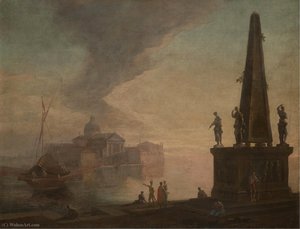
Johann Richter (1763-1825): A Venetian Visionary
Johann Salomon Richter (1761-1798) was a German engraver famed for his illustrations, notably in Mozart's 'Magic Flute'. Explore his intricate designs & 18th-century artistry. He established himself as a prominent figure in the German artistic landscape during the Romantic era, leaving behind a legacy of meticulously crafted prints and watercolors that continue to captivate audiences today. Richter’s artistic journey began in Wunsiedel, Bavaria, where he honed his skills in engraving before embarking on a prolific career dedicated to capturing the beauty of Venetian landscapes and architectural grandeur.- Early Influences: Richter's formative years were marked by exposure to classical art and engraving techniques—influences that would profoundly shape his artistic style. His apprenticeship under Johann Christian Dill, a celebrated engraver, instilled in him a mastery of precision and detail, characteristics evident throughout his oeuvre.
- Venetian Landscapes: Richter’s most enduring contribution to art history lies in his breathtaking watercolor landscapes depicting Venice during the Napoleonic era. Unlike many contemporaries who favored grand historical narratives, Richter focused on capturing subtle atmospheric effects—misty mornings, shimmering canals reflecting sunlight—creating scenes imbued with an unparalleled sense of tranquility and realism.
- Technique & Style: Richter’s artistic approach was characterized by meticulous observation and painstaking execution. He employed a technique known as ‘grisaille,’ utilizing shades of gray to build up tonal depth and texture, achieving remarkable luminosity and capturing the nuances of light and shadow with exceptional skill. His watercolors are renowned for their delicate washes and subtle gradations, demonstrating an unparalleled sensitivity to color and form.
- Notable Works: Among Richter’s celebrated paintings include “Church of San Segundo,” a monumental watercolor depicting Ávila's historic basilica—a testament to his ability to convey grandeur and spiritual reverence. His engravings, such as “Untitled (DD2EAU)” and “Untitled (DD2EBA),” exemplify the precision and artistry demanded by the engraving medium, showcasing his mastery of line and tonal manipulation.
- Legacy & Significance: Richter’s work stands apart from many Romantic painters of his time due to its understated elegance and focus on capturing fleeting moments of beauty. He is considered a pivotal figure in Venetian watercolor painting, establishing a stylistic precedent that influenced subsequent generations of artists. His meticulous attention to detail and atmospheric realism cemented his place as one of the foremost landscape painters of the 18th century.