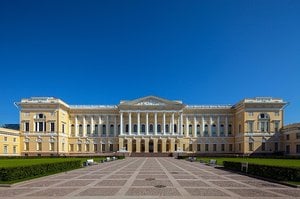
Grigory Chernetsov, 1802 – 1865

لوحات Grigory Chernetsov: أشهر 2 أعمال، مرتبة حسب الأهمية

تُعد Military Gallery of the Winter Palace (1829) أشهر لوحات Grigory Chernetsov، والموجودة في متحف الإرميتاج، سانت بطرسبرغ. تضم قائمتنا 2 من أعمال Grigory Chernetsov؛ وتُعد الـ 2 المذكورة أدناه هي الأكثر شهرة عالمياً، مع توضيح سنة إنتاجها، والمتحف الذي يضمها، وأهميتها الفنية.

تُصنف الأعمال بناءً على درجة شعبيتنا، التي تجمع بين عمليات البحث والزيارات والطلبات لكل عمل فني. تم التحديث في نوفمبر 2026. يمكن طلب كل لوحة فنية في هذه الصفحة كنسخة زيتية مرسومة يدوياً بجودة المتاحف، أو كمطبوعة فنية فاخرة، وذلك بالمقاس الذي تختارونه.

بورتريه لـ Grigory Chernetsov
Grigory Chernetsov · 1802 – 1865
تاريخ الميلاد · تاريخ الوفاة
1802 – 1865, Lukh
الأعمال الموجودة في كتالوجنا
2
الأكثر شهرة
Military Gallery of the Winter Palace (1829)
أكبر عدد من الأعمال في
متحف الإرميتاج

أشهر 10 لوحات لـ Grigory Chernetsov

Military Gallery of the Winter Palace (1829) للفنان Grigory Chernetsov
1

Military Gallery of the Winter Palace

1829 · Oil On Canvas · متحف الإرميتاج, سانت بطرسبرغ

Military Gallery of the Winter Palace is a work by the Russian artist Grigory Chernetsov. Also identified as Perspective View of the War Gallery of 1812 in the Winter Palace, the painting captures a significant architectural space within the imperial residence. The artist, whose full name is Grigori Grigorievich Chernetsov, is also documented in historical records as NIKANOR GRIGORJEWITSCH TSCHERNEZOW.

نسخة زيتية مرسومة يدوياً من $306 28 × 36 cm بنفس حجم العمل الأصلي $622 94 × 122 cm اطلب بالحجم الأصلي →

أين يمكنك مشاهدة لوحات Grigory Chernetsov

المتاحف 2 التي تضم أكبر عدد من اللوحات الموجودة في هذه الصفحة.

المتحف المدينة أعمال Grigory Chernetsov لوحات من هذه القائمة
متحف الإرميتاج, سانت بطرسبرغمتحف الإرميتاج سانت بطرسبرغ 1 Military Gallery of the Winter Palace
متحف الدولة الروسي, سانت بطرسبرغمتحف الدولة الروسي سانت بطرسبرغ 1 Parade Celebrating the End of Military Action in the Kingdom of Poland on Tsaritsa Meadow in St Petersburg on 6 october 1831

أشهر لوحات Grigory Chernetsov عاماً بعد عام

عمل Grigory Chernetsov لمدة 5 سنوات فقط، من 1829 إلى 1833. إليكم لمحة عن تلك المسيرة المهنية القصيرة عاماً بعد عام، من خلال أشهر لوحاته.

  1. 1829
    Military Gallery of the Winter Palace (1829) للفنان Grigory Chernetsov
    الرقم 1 من أصل 2

    Military Gallery of the Winter Palace

    العمر 27 · متحف الإرميتاج

    Military Gallery of the Winter Palace is a work by the Russian artist Grigory Chernetsov. Also identified as Perspective View of the War Gallery of 1812 in the…

  2. 1833

أسئلة حول لوحات Grigory Chernetsov

ما هي أشهر لوحة لـ Grigory Chernetsov؟أظهر الإجابة

Military Gallery of the Winter Palace (1829)

كم كان عمر Grigory Chernetsov عندما رُسمت Military Gallery of the Winter Palace؟أظهر الإجابة

عمر 27 عاماً: يعود تاريخ Military Gallery of the Winter Palace إلى عام 1829، وقد وُلد Grigory Chernetsov في 1802.

كم عدد اللوحات التي رسمها Grigory Chernetsov؟أظهر الإجابة

تضم قائمتنا 2 من أعمال Grigory Chernetsov، التي يعود تاريخها من 1829 إلى 1833.

أين توجد أشهر لوحات Grigory Chernetsov؟أظهر الإجابة

معظمها موجود في متحف الإرميتاج (سانت بطرسبرغ) و متحف الدولة الروسي (سانت بطرسبرغ). وتدرج القائمة أعلاه المتاحف واحداً تلو الآخر.

ما هي أشهر لوحات Grigory Chernetsov المبكرة والأخيرة؟أظهر الإجابة

أقدم لوحة في هذه الصفحة هي من عام Military Gallery of the Winter Palace (1829)، وأحدثها من عام Parade Celebrating the End of Military Action in the Kingdom of Poland on Tsaritsa Meadow in St Petersburg on 6 october 1831 (1833).

هل يمكنني شراء نسخة مكررة من لوحة لـ Grigory Chernetsov؟أظهر الإجابة

نعم. يمكن طلب كل لوحة في هذه الصفحة كنسخة زيتية مرسومة يدوياً بجودة المتاحف أو كمطبوعة فنية فاخرة، بالمقاس الذي تختاره، وذلك من صفحة اللوحة نفسها.

حول Grigory Chernetsov

The Precision of the Imperial Record

To look at the work of Grigory Chernetsov is to see the nineteenth-century Russian state through a lens of rigorous observation. He was not a dreamer lost in abstraction; he was a painter of facts, a man whose brush captured the specific geometry of parades and the exact light of the Volga. Born in 1802 in Lukh, within the Kostroma Province, Chernetsov emerged from a family of icon painters, a background that provided him with an early, disciplined understanding of form and tradition. This foundation did not trap him in the past, however. Instead, it gave him the technical stamina required for his later, more expansive topographical works.

His training at the Imperial Academy of Arts in Saint Petersburg under Maksim Vorobiev shaped his ability to render the physical world with clarity. By 1827, he had secured a gold medal, a distinction that signaled his arrival as a serious practitioner of the academic trend. His career was defined by a specific kind of duty. As a court painter for Emperor Nicholas I, Chernetsov was tasked with documenting the theater of power. He recorded military oaths, festivals, and official receptions with a level of detail that turned ephemeral events into permanent historical records.

The Geography of the Brush

Chernetsov’s significance lies in his ability to translate vast landscapes into structured compositions. Alongside his brother Nikanor, he moved through the edges of the empire, from the Caucasus to the Middle East. These were not mere excursions but systematic visual surveys. His travels took him through Egypt, Palestine, Syria, Greece, and Turkey, where he applied a meticulous technique to capture the architecture and light of the Levant. The resulting lithographic albums, such as those documenting Palestine between 1842 and 1843, provided a rare, documented view of these regions for a Russian audience.

The scale of his ambition is most evident in his work along the Volga River. Between 1838 and 1851, he participated in the creation of a massive panorama of the Volga banks, a work stretching 700 meters in length. This was not an exercise in romanticized scenery but a feat of topographical endurance. His ability to maintain accuracy across such a monumental distance demonstrates a technical control that few of his contemporaries could match. He understood that a landscape is composed of specific, measurable parts: the bend of a river, the height of a bank, the particular shade of a shoreline.

A Legacy of Documentation

While often overshadowed by the more emotive movements of his era, Chernetsov’s contribution remains grounded in the tangible. His work provides the visual evidence of an era's social and political structure. In paintings like The military parade on October 6, 1831 in Tsaritsyn Lug, he did more than paint a scene; he embedded portraits of contemporaries like Alexander Pushkin and Vasily Zhukovsky into the very fabric of a state event. He turned the parade ground into a gallery of the Russian intelligentsia.

His death in Saint Petersburg in 1865 marked the end of a career built on the intersection of art and official record. The sheer volume of his preparatory sketches, drawings, and studies constitutes the true weight of his artistic output. These works reveal the process behind the finished panorama and the courtly portraits. He left behind a body of work that functions as a precise, unblinking eye on the changing landscapes and political ceremonies of nineteenth-century Russia.