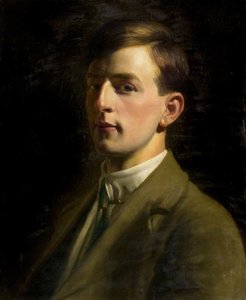
Francis Cooper (1867 – 1943): A Pioneer of British Impressionism
Francis Cooper was born in Dundee, Scotland, on November 25, 1867, into a family steeped in artistic tradition. His father, John Francis Sartorius II, was a celebrated British painter known for his equestrian portraits and landscapes—a lineage that profoundly shaped Cooper’s own artistic sensibilities. From an early age, Cooper demonstrated exceptional talent, studying at the Dundee College of Art and subsequently honing his skills at the Slade School of Fine Art in London under Hubert Gerhardts, influencing him to adopt a distinctive Impressionistic style.
Early Influences:Sartorius II’s mastery of capturing movement and light served as an immediate inspiration for Cooper, fostering a dedication to portraying subjects with immediacy and vibrancy.
Dundee College of Art Period (1893-1929): Cooper established Dundee College of Art in 1893, transforming it into Scotland’s first art college and championing a progressive curriculum focused on fostering creativity and experimentation. During this time, he produced numerous landscapes and portraits reflecting the beauty of his surroundings and capturing the essence of human character.
London Years (1929-1943): Cooper relocated to London in 1929, continuing to exhibit his work and collaborating with fellow artists like John MacDonald Aiken. His paintings from this period explored themes of urban life and spirituality, demonstrating a nuanced understanding of both the visual world and human emotion.
Notable Paintings & Artistic Style
Cooper’s artistic style was characterized by a meticulous attention to detail combined with a loose brushstroke technique—a hallmark of Impressionism. He skillfully blended colors on canvas, capturing fleeting moments of light and atmosphere with remarkable accuracy. His landscapes often depicted the Scottish Highlands in luminous hues, conveying a sense of tranquility and grandeur. Portraits were rendered with sensitivity and psychological insight, revealing subtle nuances of expression and embodying the inner life of his subjects.
“The Shepherdess” (1903): This iconic painting exemplifies Cooper’s Impressionistic approach—a masterful depiction of rural Scotland bathed in golden sunlight.
“John MacDonald Aiken” (1928): Cooper's portrait of fellow artist Aiken showcases his ability to convey emotion and personality through subtle gestures and facial expressions.
Recognition & Legacy
Cooper’s contributions to British art were recognized by the Royal Academy, who elected him a Fellow in 1930—a prestigious honor reflecting his artistic merit and scholarly pursuits. He remained active as an educator and artist until his death in London on August 24, 1943. Cooper's legacy extends beyond his individual paintings; he established Dundee College of Art as a beacon of artistic innovation and championed the importance of nurturing young talent—leaving an indelible mark on Scottish art history.
Source: Art UK
Explore the profound beauty of pastoral art history. From the mythic Arcadian ideal to Gainsborough’s landscapes, discover how timeless shepherd motifs evoke serenity and luxury in fine art collections.
Explore the luminous legacy of Sir Joshua Reynolds. Discover how the master of the 'Grand Style' used dramatic light and classical elegance to define 18th-century British portraiture in this expert art history guide for collectors and enthusiasts.
Explore the captivating world of Francis Sartorius II (1734-1804), a leading British painter renowned for his exquisite equestrian portraits and hunting scenes. Discover his life, techniques & enduring legacy.
كم عدد لوحات Francis Cooper المعروضة على ArtsDot.com؟
5
ما هي الأسماء الأخرى التي يُعرف بها Francis Cooper؟
John Francis Sartorius Ii
هل لا تزال أعمال Francis Cooper محمية بموجب حقوق الطبع والنشر؟
نعم، لا تزال أعمال هذا الفنان محمية بموجب حقوق الطبع والنشر.
ما هي اللوحة الأعلى تقييماً للفنان Francis Cooper على منصة ArtsDot.com؟
John Bulloch Souter (1890–1972)
من هو Francis Cooper؟
Francis Cooper (1867 – 1943): A Pioneer of British Impressionism
Francis Cooper was born in Dundee, Scotland, on November 25, 1867, into a family steeped in artistic tradition. His father, John Francis Sartorius II, was a celebrated British painter known for his equestrian portraits and landscapes—a lineage that profoundly shaped Cooper’s own artistic sensibilities. From an early age, Cooper demonstrated exceptional talent, studying at the Dundee College of Art and subsequently honing his skill
Q5
He celebrated idealized beauty.
ما هي أفضل 3 لوحات تصنيفاً لـ Francis Cooper على ArtsDot.com؟
John Bulloch Souter (1890–1972), The Brook, Durham Cathedral (River Bridge)