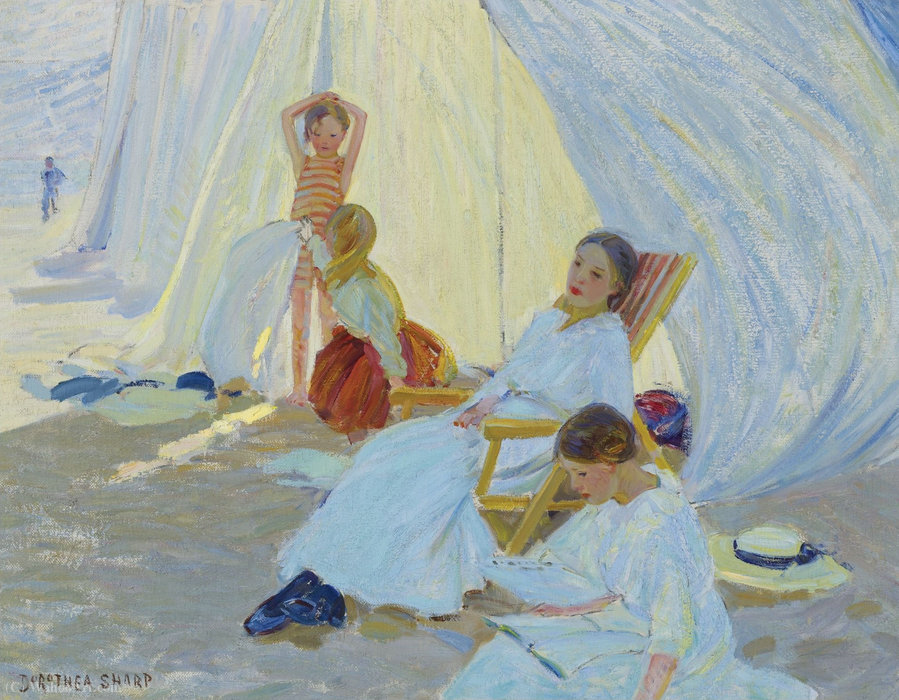

Dorothea Sharp, 1874 – 1955

لوحات Dorothea Sharp: أشهر 2 أعمال، مرتبة حسب الأهمية

أشهر لوحة لـ Dorothea Sharp هي A Day at the Sea. تضم قائمتنا 2 من أعمال Dorothea Sharp؛ وتُعد الـ 2 المذكورة أدناه هي الأكثر شهرة عالمياً، مع توضيح سنة إنتاجها، والمتحف الذي يضمها، وأهميتها الفنية.

تُصنف الأعمال بناءً على درجة شعبيتنا، التي تجمع بين عمليات البحث والزيارات والطلبات لكل عمل فني. تم التحديث في نوفمبر 2026. يمكن طلب كل لوحة فنية في هذه الصفحة كنسخة زيتية مرسومة يدوياً بجودة المتاحف، أو كمطبوعة فنية فاخرة، وذلك بالمقاس الذي تختارونه.

بورتريه لـ Dorothea Sharp
Dorothea Sharp · 1874 – 1955
تاريخ الميلاد · تاريخ الوفاة
1874 – 1955, Dartford
الأعمال الموجودة في كتالوجنا
2
الأكثر شهرة
A Day at the Sea

أشهر 10 لوحات لـ Dorothea Sharp

أسئلة حول لوحات Dorothea Sharp

ما هي أشهر لوحة لـ Dorothea Sharp؟أظهر الإجابة

A Day at the Sea

كم عدد اللوحات التي رسمها Dorothea Sharp؟أظهر الإجابة

تتضمن قائمة أعمالنا 2 من أعمال Dorothea Sharp.

هل يمكنني شراء نسخة مكررة من لوحة لـ Dorothea Sharp؟أظهر الإجابة

نعم. يمكن طلب كل لوحة في هذه الصفحة كنسخة زيتية مرسومة يدوياً بجودة المتاحف أو كمطبوعة فنية فاخرة، بالمقاس الذي تختاره، وذلك من صفحة اللوحة نفسها.

حول Dorothea Sharp

Dorothea Sharp: A Life in Impressionistic Hues

Early Life and Education

  • Born in Dartford, Kent, United Kingdom in 1874, Dorothea Sharp began her artistic training relatively late, at the age of 21.
  • She funded her education with an inheritance of £100 from an uncle, allowing her to attend the Richmond Art School under C.E. Johnson RI.
  • Further studies at the Regent Street Polytechnic brought her work to the attention of George Clausen and David Murray, who recognized her talent.

Artistic Development & Influences

  • A pivotal moment in Sharp’s artistic journey was her time in Paris, where she encountered the works of the Impressionists, particularly Claude Monet.
  • Monet's influence led her to adopt a highly impressionistic and spontaneous style that characterized her work for the rest of her life. She embraced capturing fleeting moments and the effects of light.
  • Her early work showed promise, but it was through embracing Impressionism that she found her distinctive voice.

Career & Recognition

  • Sharp became an associate of the Society of Women Artists in 1903 and a full member in 1908, later serving as its Vice-President for four years.
  • She was elected to both the Royal Society of British Artists (1907) and the Royal Institute of Oil Painters (1922), demonstrating her growing reputation within the art world.
  • Exhibited regularly at the Royal Academy from 1901 to 1948, showcasing a consistent body of work.
  • Held her first solo exhibition at the Connell Gallery in 1933, receiving critical acclaim and being hailed as “one of England’s greatest living woman painters” by Harold Sawkins, editor of *The Artist* magazine.

Themes & Style

  • Sharp's oeuvre is primarily known for two key themes: evocative landscapes and naturalistic studies of children at play.
  • Her landscapes often depict scenes from her travels, including locations in Europe (Cassis), Bosham, and St Ives, Cornwall.
  • Her depictions of children are particularly charming, capturing their spontaneity and joy with a delicate touch. She avoided overly sentimental portrayals, focusing on natural interactions.
  • Her style is characterized by loose brushwork, vibrant colors, and an emphasis on light and atmosphere, hallmarks of Impressionism.

Later Life & Legacy

  • In the 1920s and 30s, Sharp continued to travel and paint, forming a lifelong friendship with fellow artist Marcella Smith in St Ives, Cornwall.
  • She was made an honorary member of the St. Ives Society of Artists (StISA) in 1928.
  • Dorothea Sharp passed away on December 17, 1955, at the age of 81.
  • While not as widely recognized today as some of her contemporaries, Dorothea Sharp remains a significant figure in British Impressionism, celebrated for her sensitive portrayals of everyday life and her mastery of light and color.