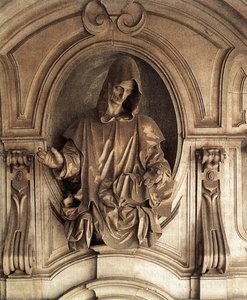
Cosimo Fanzago: Life and Legacy
Early Life and Training
- Cosimo Fanzago was born in Clusone, Italy, in 1591. His family had a strong background in bronze-casting and architecture, providing an early foundation for his artistic pursuits.
- In 1608, he moved to Naples after a brief stay in Chieti, marking the beginning of his significant career in Southern Italy.
- Initially, Fanzago trained as a marble sculptor (*maestro di scultura di marmo*) under the Tuscan sculptor Angelo Landi, gaining essential skills in stonework and design.
Artistic Development and Influences
- Fanzago’s early work included sculptural decorations for Neapolitan churches and chapels, such as the sepulchre monument of Mario Carafa.
- He later became an assistant to Giovanni Giacomo di Conforto, a leading architect in Naples, broadening his architectural expertise.
- His style was profoundly influenced by Baroque masters like Gian Lorenzo Bernini and Francesco Borromini, evident in the dynamic forms and elaborate ornamentation of his designs.
Major Achievements and Notable Works
- One of Fanzago’s first independent architectural projects was the design of San Giuseppe dei Vecchi a San Potito (completed 1669).
- He designed the church of Santa Maria Egiziaca a Pizzofalcone, showcasing a Greek cross plan and blending elements from Bernini and Borromini.
- Other significant works include the Church of Santa Teresa a Chiaia and the monumental Church of Santa Maria Maggiore (1653-1675).
- Fanzago also created the Guglia di San Gennaro, a votive column that became a prototype for similar monuments in Southern Italy.
Historical Significance and Legacy
- Cosimo Fanzago is considered the greatest Baroque architect and sculptor in Naples during his time.
- His work played a crucial role in shaping the architectural landscape of Naples, contributing to its rich artistic heritage.
- He skillfully combined sculptural and architectural elements, creating integrated designs that were both visually stunning and structurally innovative.
- Fanzago’s influence extended through his pupils, including Lorenzo Vaccaro, who continued his legacy in Neapolitan Baroque art.
- Despite a period of exile following involvement with Masaniello's revolt, Fanzago returned to Naples and continued to produce masterpieces until his death in 1678 at the age of 87.
Personal Life & Challenges
- Fanzago enjoyed support from influential figures like the Benedictines, viceroys, and Carthusians, which helped establish his workshop.
- His sympathy for Masaniello’s revolt led to a death sentence and temporary exile to Rome, demonstrating the political complexities of his era.