Early Life and Artistic Beginnings
Claudio José Tozzi, born in São Paulo, Brazil, in 1944, emerged as a pivotal figure in Brazilian art during a period of intense political and social upheaval. While initially enrolling at the University of São Paulo’s Faculty of Architecture and Urbanism in 1964, Tozzi quickly found his calling not in blueprints but in graphic expression. This shift wasn't accidental; it was born from a desire to engage directly with the burgeoning cultural landscape and, crucially, to circumvent the limited avenues available for young artists seeking visibility. He soon connected with Mário Schenberg, a luminary critic and physicist who recognized Tozzi’s work as belonging to the vibrant new figuration movement—a contemporary response to the concrete avant-gardes that were prevalent at the time.
The early 1960s in São Paulo presented a challenging environment for artistic expression. Traditional exhibition spaces were scarce, prompting Tozzi and his contemporaries – including Wesley Duke Lee, Antonio Dias, and Roberto Magalhães – to seek alternative platforms. He turned towards the readily accessible language of commercial culture, embracing the aesthetics of pop art as a means of communicating with a broader audience. This wasn’t merely stylistic imitation; it was a strategic appropriation of visual codes to address pressing political issues that dominated headlines—the space race, the Cuban Revolution, and the growing unrest within Brazil itself.
Challenging Censorship and Political Commentary
Tozzi's art became intrinsically linked with resistance. He fearlessly tackled socio-cultural norms and satirized the Brazilian information network, which was heavily censored under the military dictatorship. His work served as a visual counterpoint to official narratives, offering a critical perspective on power structures and societal injustices. Iconic representations of astronauts and Che Guevara emerged during this period, becoming potent symbols of aspiration and rebellion.
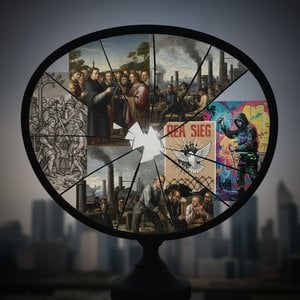
The mid-1960s witnessed Tozzi’s focus on the collective experience—crowds and political figures frequently populated his canvases. Multitude, created in 1968, exemplifies this recurring motif: a powerful depiction of people united in protest. This work is particularly resonant when considered within the context of Brazil's escalating repression that year, which forced many artists and intellectuals into exile. The painting’s enlarged details and juxtaposed raised fists powerfully convey the strength inherent in collective action. By employing pop art’s accessible visual language, Tozzi aimed to awaken a wider public consciousness to the mobilizing potential of artistic expression.
Evolution of Style and Technique
Following a formative study trip to Europe in 1969, Tozzi's artistic trajectory underwent a significant transformation. While his commitment to social commentary remained steadfast, he shifted his focus towards the formal elements of his work, moving away from the overtly pamphlet-like character of his earlier pieces. The 1970s saw an exploration of chromatic research, delving into the expressive possibilities of color and form.
The following decade brought a broadening of thematic concerns, with figures like parrots and coconut groves entering his repertoire alongside a growing tendency towards geometric abstraction. A particularly innovative technique emerged during this time: the use of a reticulated rubber roller in his paintings. This method added texture and volume to his work, creating a unique visual depth that distinguished his style. Beyond the canvas, Tozzi extended his artistic reach into public spaces, creating impactful panels for locations throughout São Paulo—such as Zebra in Praça da República and at Sé Metro Station—and Rio de Janeiro, including installations at Maracanã Metro Station.
Legacy and International Recognition
Claudio Tozzi’s contributions to Brazilian art have been widely recognized both domestically and internationally. His work has been featured in significant exhibitions such as Brazil + 500 Rediscovery Show (2000) and Ship of Fools (2005) at the Museum of Contemporary Art of the University of São Paulo (MAC/USP). His participation in events like the Latin American Codex Prize in Buenos Aires (1968), the Bienal Internacional del Deporte in Barcelona (1971), and representation at the Venice Biennale further cemented his reputation on the global stage.
Tozzi’s enduring legacy lies in his ability to seamlessly blend artistic innovation with potent social critique. He demonstrated that art could be both aesthetically compelling and politically charged, capable of challenging established norms and inspiring collective action. His work continues to resonate today, serving as a powerful reminder of the importance of artistic freedom and the transformative potential of visual expression.