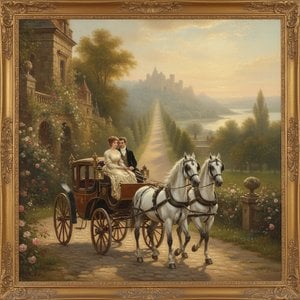
Arthur Louis Townshend: Bridging Sport and Sentiment in Victorian Landscape Painting
Arthur Louis Townshend (1848–1927) stands as a quietly influential figure within the landscape painting tradition of late 19th-century Britain, particularly renowned for his depictions of equestrian subjects and rural scenes imbued with an understated emotional resonance. Born in Fredericks Grove, Ohio, he embarked on a journey that ultimately led him to establish a successful studio in Iowa before relocating to Bath, Somerset, where he spent the remainder of his life pursuing artistic endeavors and fostering connections within the burgeoning art world.
Early Life and Artistic Foundations
Townshend’s formative years instilled in him a deep appreciation for observation and meticulous detail—qualities that would become hallmarks of his distinctive style. While biographical information remains somewhat sparse, records indicate he honed his skills initially through self-taught study and experimentation with various mediums before formally pursuing artistic training at the Royal Academy Schools in London. This exposure to academic conventions undoubtedly shaped his understanding of compositional principles and tonal harmony, though Townshend swiftly developed a personal aesthetic that prioritized capturing fleeting moments of beauty and conveying nuanced psychological states.
A Distinctive Style: Sporting Landscapes and Equestrian Portraits
Townshend’s artistic reputation rests primarily on his captivating landscapes—often featuring horses engaged in athletic pursuits—and exquisitely rendered equestrian portraits. Unlike many of his contemporaries who favored grand vistas or idealized depictions of nobility, Townshend focused on capturing the immediacy of rural life and the palpable energy of equine activity. His canvases pulsate with atmospheric detail, meticulously rendered brushstrokes conveying not merely visual information but also a sense of movement and emotion. Consider “Horses Returning from Exercise,” painted in 1886 at Newmarket Heath—a masterful example of Impressionistic technique where dappled sunlight illuminates muscular horses galloping across the meadow, capturing both physical exertion and an underlying spirit of exhilaration.
Notable Works and Exhibitions
Townshend’s prolific output spanned several decades, resulting in a substantial body of paintings that gained recognition through exhibitions at prestigious institutions such as the Royal Academy and the Tate Gallery. His oeuvre includes “Winfreda,” a striking portrait of a chestnut horse executed in 1900—a testament to his ability to convey profound empathy for his subjects. The painting’s subtle tonal gradations and careful attention to anatomical accuracy exemplify Townshend's commitment to realism while simultaneously conveying an aura of dignified repose. Furthermore, Townshend’s involvement with the Stereoview Company cemented his legacy as a pioneer in photographic reproduction—a medium he skillfully utilized to disseminate images of Iowa landscapes and equestrian subjects to a wider audience.
Legacy and Influence
Though Townshend may not command the same level of fame as some Victorian luminaries, his contribution to British landscape painting is undeniable. His understated style—characterized by sensitivity to light and atmosphere—influenced subsequent generations of artists who sought to emulate his ability to infuse their canvases with emotional depth. Moreover, Townshend’s pioneering use of stereoview photography demonstrated the transformative potential of new technologies in disseminating artistic vision and fostering appreciation for the natural world. He remains a compelling subject for art historians interested in exploring the intersection between observation, technique, and psychological expression within the Victorian era.
Further Exploration
For those wishing to delve deeper into Arthur Louis Townshend’s artistic achievements, Victoria Art Gallery offers a comprehensive collection showcasing his landscapes and portraits—a valuable resource for understanding his distinctive style and enduring legacy. Examining his work alongside contemporaries like Gainsborough and Sickert provides invaluable insight into the broader context of British art during this pivotal period.