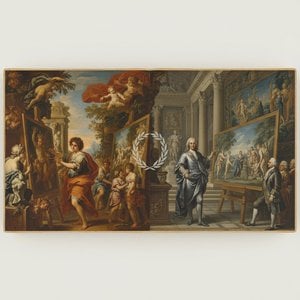
Antonio Paglia: Brescia’s Baroque Visionary
Antonio Paglia (1680 – 1747) stands as a pivotal figure in the artistic landscape of Brescia, Italy—a testament to the enduring legacy of the Baroque period. Born into a family steeped in artistic tradition, Paglia’s father, Francesco Paglia, was himself a respected painter, establishing a lineage dedicated to capturing beauty and conveying spiritual fervor through masterful technique. This familial influence undoubtedly shaped Paglia's formative years, fostering an appreciation for visual storytelling that would permeate his entire oeuvre.
Collaborating closely with his brother Angelo, Paglia embarked on a creative partnership that enriched Brescia’s artistic output. Their combined efforts solidified their reputation as skilled artisans and cemented their place within the vibrant Baroque milieu of Lombardy. Recognizing the importance of formal training, Paglia sought guidance from Sebastiano Ricci in Venice (1714), immersing himself in the Venetian style—characterized by luminous color palettes and dynamic compositions—a stylistic choice that would profoundly impact his subsequent artistic endeavors. Returning to Brescia by 1718, he established a studio where he honed his craft and began to realize ambitious projects destined to elevate Brescia’s cultural identity.
Paglia's artistic brilliance shone most prominently in his monumental decorative cycle for the parish church of Chiari—a breathtaking undertaking that exemplifies the grandeur and emotional depth synonymous with Baroque art. This expansive fresco series, depicting biblical narratives with meticulous detail and vibrant hues, showcases Paglia’s mastery of perspective, chiaroscuro, and color theory. The cycle's ambitious scale demanded considerable planning and execution, reflecting Paglia’s dedication to artistic excellence and cementing his reputation as Brescia’s foremost painter.
Beyond Chiari, Paglia produced numerous altarpieces and religious paintings—each imbued with a palpable sense of spirituality and ornamented with intricate ornamentation. His works frequently incorporated elements of Venetian influence, demonstrating an awareness of contemporary artistic trends while maintaining a distinctly Italian aesthetic sensibility. Paglia's meticulous attention to detail and his ability to evoke emotion through visual imagery solidified his position as one of Brescia’s most celebrated Baroque artists.
Antonio Paglia’s legacy extends beyond the canvases he adorned; it resides in the enduring impact of his artistic vision on Brescia’s cultural heritage. His contribution to the Baroque tradition—particularly his monumental cycle for Chiari—continues to inspire admiration and scholarly study, ensuring that Paglia's name remains etched in the annals of Italian art history.