


The Rise of Acrylic on Paper: A Historical Perspective
 Swing
SwingExperience Sam Gilliam's 'Swing' (1969): A monumental acrylic masterpiece blending abstract expressionism & textile art. Vibrant colors, fluid forms evoke emotion.
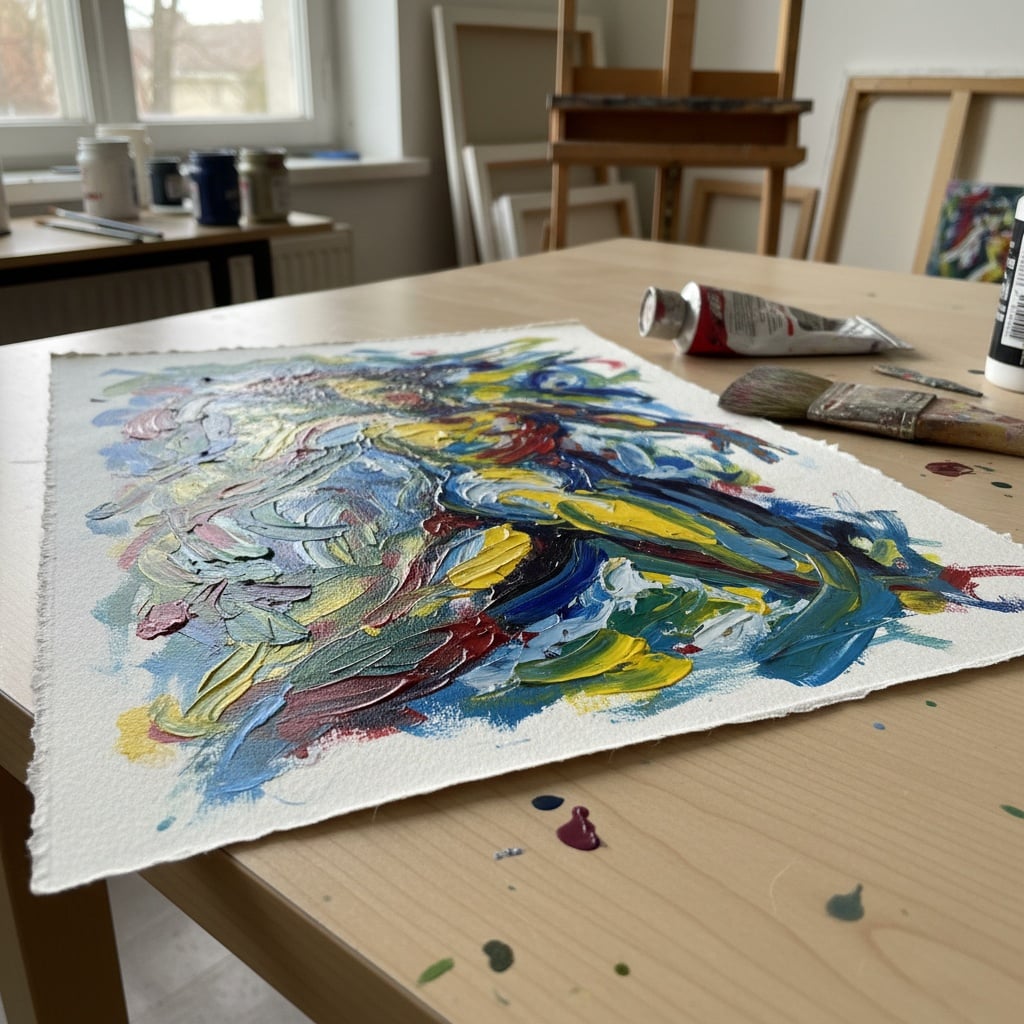
While oil paint traditionally reigned supreme as the medium for ambitious artistic expression, the latter half of the 20th century witnessed a quiet revolution – the embrace of acrylics, and with it, a newfound appreciation for paper as a legitimate canvas. This wasn’t merely a shift in materials; it was a philosophical realignment. Post-war America saw artists challenging established norms, seeking immediacy and directness in their work. The slower drying time of oils felt restrictive to some, while the vibrant intensity and rapid versatility of acrylics offered an exhilarating freedom. Artists began experimenting with unconventional supports, moving away from stretched linen towards the more accessible, often less expensive, surface of paper. This wasn’t about limitation; it was about expanding possibilities. The very nature of paper – its inherent fragility, its connection to writing and documentation, its capacity for texture – became integral to the artistic statement.
Early pioneers like Helen Frankenthaler, though primarily known for her stain-soaking techniques on canvas, indirectly paved the way by demonstrating the potential of diluted paint interacting directly with absorbent surfaces. However, it was artists such as Sam Gilliam who truly championed acrylic on paper, pushing the boundaries of abstraction and challenging traditional notions of painting. His monumental “Swing” (1969), a draped acrylic masterpiece, exemplifies this shift – a work that transcends categorization, existing somewhere between painting, sculpture, and installation. The fluidity of the paint, unconstrained by the rigid structure of a frame, speaks to a liberation from conventional artistic boundaries. This period also saw Color Field painters like Morris Louis exploring the effects of layering translucent acrylic washes on paper, creating luminous fields of color that evoke a sense of ethereal depth.
Mastering the Medium: Techniques for Acrylic Painting on Paper
Acrylic painting techniques are different styles of manipulating and working with polymer-based acrylic paints. Acrylics differ from oil paints in that they have shorter drying times (as little as 10 minutes) and are soluble in water. Since acrylic ...
The allure of acrylics lies in their adaptability. Unlike oils which demand careful blending and glazing over extended periods, acrylics allow for both meticulous detail and spontaneous gesture. However, working with paper presents unique challenges. The absorbency of the surface requires a thoughtful approach to prevent unwanted bleed or warping. A crucial first step is understanding the weight and composition of your chosen paper. Heavier-weight papers, specifically those designed for watercolor or mixed media, are generally preferred as they can withstand multiple layers of paint without buckling. Applying a light coat of gesso – even on papers already primed – can further enhance durability and provide a smoother surface for application.
A diverse range of techniques come into play when working with acrylics on paper. Dry brushing, where minimal paint is applied with a stiff brush, creates textured effects and allows underlying layers to peek through. Washes, achieved by diluting the paint with water or an acrylic medium, offer transparency and luminosity, ideal for building depth and creating atmospheric effects. Pouring techniques, popularized in recent years, involve manipulating fluid acrylics directly on the paper’s surface, resulting in mesmerizing patterns and organic forms. Artists often employ masking fluids to protect specific areas of the paper while applying washes or other techniques, allowing for precise control and intricate designs. The speed at which acrylics dry also lends itself to layering – building up successive coats of color to create complex visual narratives.
Color & Composition: Exploring Emotional Depth with Acrylics
Acrylic’s inherent vibrancy makes it an exceptional medium for exploring the psychological power of color. The intensity and clarity of the pigments allow artists to evoke a wide range of emotions, from the serene tranquility of cool blues and greens to the energetic dynamism of warm reds and yellows. However, simply applying bright colors isn't enough; understanding color theory is paramount. Complementary color schemes – pairing opposing hues on the color wheel – create visual tension and excitement, while analogous schemes – utilizing adjacent colors – foster harmony and balance.
Compositionally, acrylics on paper lend themselves to both abstract and representational approaches. Abstract expressionists often embraced “all-over” compositions, eschewing a central focal point in favor of a dynamic interplay of color and form. This approach emphasizes the materiality of the paint itself, inviting viewers to immerse themselves in the sensory experience of the artwork. Conversely, artists employing more representational styles can utilize acrylics’ versatility to create detailed landscapes, portraits, or still lifes. The key is to consider how color, texture, and composition work together to convey a specific mood or message. The inherent white space of the paper itself also becomes an active element in the composition – a counterpoint to the applied paint, offering breathing room and visual clarity.
Notable Artists and Their Use of Acrylic on Paper
 Morris Louis
Explore Morris Louis (1912-1962), a pioneer of Color Field painting! Discover his innovative veil paintings, vibrant hues & lasting impact on abstract art.
Beyond Gilliam and Louis, numerous artists have demonstrated the remarkable potential of acrylics on paper. Arshile Gorky, a precursor to Abstract Expressionism, experimented with diluted acrylics in his evocative compositions, creating dreamlike landscapes that bridge abstraction and figuration. Franz Kline’s bold black-and-white paintings, though often executed on canvas, found equally compelling expression on paper, showcasing the power of gestural mark-making. More contemporary artists continue to push the boundaries of the medium. The work of Jay Meuser exemplifies a non-objective approach, utilizing acrylics to create vibrant, layered compositions that explore pure form and color.
These artists weren’t simply transferring techniques from canvas to paper; they were adapting their approaches, responding to the unique qualities of the surface. The intimacy of working on paper often led to a more direct and spontaneous style – a sense of immediacy that is palpable in their work. The accessibility of acrylics also democratized artistic practice, allowing artists to experiment freely without the constraints of expensive materials or lengthy drying times.
Paper Choices & Surface Preparation for Optimal Results
Selecting the right paper is fundamental to successful acrylic painting. Lightweight papers are prone to buckling and tearing, while heavier-weight options provide a more stable foundation. Watercolor papers, typically ranging from 140lb (300gsm) to 640lb (1200gsm), offer excellent absorbency and durability. Mixed media papers, designed to withstand various techniques, are also a good choice. Consider the texture of the paper as well – smooth surfaces are ideal for detailed work, while textured papers add visual interest and depth.
Surface preparation is equally important. Applying a light coat of gesso not only enhances durability but also creates a more consistent surface for paint application. For particularly delicate papers, consider using a diluted gesso or applying multiple thin coats to avoid warping. Some artists prefer to size the paper first – applying a layer of rabbit skin glue or acrylic sizing to reduce absorbency and prevent bleed. Experimentation is key – different papers will respond differently to various techniques, so it’s important to find what works best for your individual style.
Preserving Your Artwork: Archival Practices for Acrylic Paintings on Paper
Acrylic paintings on paper, while durable, require careful preservation to ensure their longevity. Unlike oils which are relatively stable once dry, acrylics can be susceptible to environmental factors such as humidity and UV light. Framing your artwork under UV-protective glass is essential to prevent fading and discoloration. Acid-free matting materials will further protect the paper from deterioration.
Avoid direct sunlight and extreme temperature fluctuations. Store finished paintings in a dry, stable environment away from moisture and pollutants. When handling your artwork, wear gloves to prevent oil transfer from your skin. For long-term storage, consider using archival sleeves or boxes specifically designed for works on paper. At WahooArt, we understand the importance of preserving artistic heritage. Our reproductions are crafted with gallery-quality materials and meticulous attention to detail, ensuring that your investment will be enjoyed for generations to come. Explore our collection today and discover the timeless beauty of acrylic painting.





