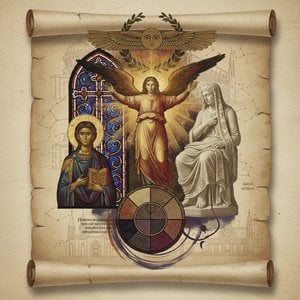
El Greco’s Ascension of Jesus: A Visionary Synthesis
Doménikos Theotokópoulos, universally known as El Greco – “the Greek” – stands apart from his contemporaries not merely as a painter but as an artist who fundamentally reshaped the visual language of the Renaissance and Mannerism. Born in Crete in 1541, amidst the waning influence of Byzantium and burgeoning Venetian patronage, El Greco embarked on a prolific artistic journey that traversed Venice and Rome before establishing himself definitively in Toledo, Spain – a city steeped in religious fervor and serving as a crucible for his distinctive style. This wasn’t simply about absorbing regional influences; it was about forging them into something profoundly original, anticipating movements like Expressionism and Cubism centuries ahead of their time. His early training within the Byzantine tradition instilled in him an unwavering dedication to meticulous detail and a deep understanding of religious iconography – principles that would guide his entire oeuvre. Yet, he refused to be confined by convention, experimenting boldly with elongated figures, vibrant colors, and dramatic lighting—characteristics that define his signature aesthetic.
- Style: El Greco’s style is undeniably Mannerist, inheriting the stylistic tendencies of artists like Parmigianino and Bronzino but pushing them to unprecedented emotional heights. He rejected the idealized proportions favored by Renaissance sculptors and painters, opting instead for figures that appear distorted yet imbued with palpable spiritual intensity.
- Technique: Primarily employing oil paint on canvas, El Greco utilized a technique characterized by thick impasto—heavy application of pigment—creating textured surfaces that convey movement and dynamism. This method was particularly evident in works like “The Dormition of the Virgin,” where the swirling drapery seems to pulsate with life.
- Historical Context: Toledo served as El Greco’s artistic home during a period marked by religious upheaval – the Spanish Inquisition gripped Spain, fostering an atmosphere of piety and dramatic fervor. This context profoundly influenced his artistic vision, informing his depictions of saints and biblical narratives with palpable emotion and psychological depth.
Symbolism: The Ascension of Jesus is laden with symbolic significance. The outstretched arms of Christ represent divine ascension and universal salvation, mirroring the iconography prevalent in Byzantine art. Angels ascending symbolize divine grace and spiritual upliftment, while the mourners at the foot of the cross embody human sorrow and repentance—a poignant reminder of humanity’s vulnerability before God's majesty. The bird soaring above the crowd serves as a potent emblem of freedom and transcendence, suggesting that faith offers liberation from earthly constraints.
Emotional Impact: El Greco’s paintings resonate with viewers on an emotional level, conveying profound feelings of awe, compassion, and spiritual yearning. His masterful use of color—particularly reds and golds—intensifies the dramatic atmosphere, captivating the eye and stirring the soul. The elongated figures and expressive gestures communicate a visceral experience of faith—a testament to El Greco’s ability to translate theological concepts into compelling visual narratives.
- Further Exploration: For insights into El Greco's artistic legacy, visit Museo de El Greco in Toledo (Museo de El Greco) to immerse yourself in reproductions of his celebrated masterpieces.
- Related Works: Discover “The Dormition of the Virgin” (The Dormition of the Virgin) and “The Resurrection” (The Resurrection), showcasing El Greco’s masterful technique and emotive storytelling.
- Resources: Explore more about El Greco's life and art at El Greco for biographical details and artistic analyses.



 معاينة الحجم الحقيقي
 اشترِ نسخة مطبوعة
 مشاركة
 مشاركة
 التفاصيل

 تحميل الملف
 قطع مشابهة
 الأشعة السينية
 عرض شرائح


 عرض المزيد






































 خيار الزجاج متاح فقط للمقاسات التي تقل عن 110 سم