A Portrait of Melancholy: Unveiling Modigliani’s ‘Seated Algerian Almaiisa’
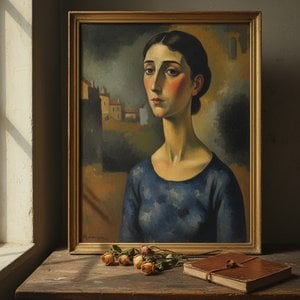
Amedeo Clemente Modigliani's “Seated Algerian Almaiisa,” painted in 1916, is more than just a portrait; it’s a distilled essence of longing and quiet contemplation. This arresting image, rendered in the artist’s signature dark palette – dominated by deep reds and blacks – immediately draws the viewer into a world of subdued intensity. The subject, an Algerian woman known simply as Almaisa, sits poised on a chair, her gaze directed off-camera, inviting us to share in her unspoken thoughts. It's a scene imbued with a palpable sense of vulnerability and a haunting beauty that has captivated audiences for over a century.
The painting’s power lies not just in its formal elements but also in the evocative atmosphere it creates. Modigliani masterfully employs chiaroscuro – the dramatic contrast between light and shadow – to sculpt the figure, emphasizing her elongated features and creating an almost sculptural quality. The cigarette held delicately in her hand is a potent symbol of both defiance and fragility; a small indulgence within a larger narrative of quiet sadness. The muted colors contribute significantly to this mood, suggesting a world steeped in shadows and hinting at unspoken stories.
The Artist and His Muse: Contextualizing the Portrait
Understanding Modigliani’s life is crucial to appreciating “Seated Algerian Almaiisa.” Born in Livorno, Italy, in 1884, he navigated a childhood marked by financial instability and recurring illness. These experiences undoubtedly shaped his artistic sensibility, fostering a deep sensitivity to the ephemeral nature of beauty and human emotion. His early exposure to the works of Nietzsche, Baudelaire, and Lautréamont – introduced by his mother and grandfather – instilled in him a rejection of conventional aesthetics and a desire to explore the darker recesses of the human psyche.
Almaisa herself was a significant figure in Modigliani’s life. She was an Algerian model who became a central presence in his studio during the early 1920s. Her enigmatic beauty, combined with her quiet dignity, provided a compelling subject for the artist's explorations of form and expression. Modigliani’s relationship with Almaisa was complex; she was both muse and friend, offering him a rare connection amidst a life often characterized by loneliness and hardship. The painting captures this dynamic—a moment of shared stillness within a turbulent existence.
A Study in Form and Expression: Modigliani's Unique Style
Modigliani’s distinctive style is immediately recognizable, and “Seated Algerian Almaiisa” exemplifies it perfectly. His elongated figures, with their subtly distorted features – particularly the almond-shaped eyes devoid of pupils – create a sense of otherworldly beauty and psychological depth. This stylistic choice wasn't merely decorative; it served to heighten the emotional impact of the portrait, suggesting an inner life that transcends mere physical representation.
The artist’s technique is characterized by loose brushstrokes and a deliberate avoidance of precise detail. He prioritized capturing the essence of his subjects—their mood, their vulnerability—over meticulous realism. This approach aligns with the broader trends of early 20th-century art, moving away from academic conventions towards a more expressive and subjective form of representation. The painting’s composition is carefully balanced, drawing the eye to Almaisa's face while simultaneously conveying a sense of isolation and introspection.
The Enduring Legacy: A Timeless Masterpiece
“Seated Algerian Almaiisa” remains one of Modigliani’s most iconic works, embodying his unique artistic vision and the profound emotional depth that characterized his oeuvre. It's a testament to the power of portraiture to capture not just likeness but also the complexities of human experience. Reproductions of this captivating painting offer an accessible way to bring this masterpiece into your home or studio, allowing you to appreciate its beauty and contemplate its enduring message of melancholy and grace.



 معاينة الحجم الحقيقي
 Switch to Print
 مشاركة
 مشاركة
 التفاصيل

 تحميل الملف
 قطع مشابهة
 الأشعة السينية
 عرض شرائح
 Stats
Stats


 عرض المزيد






































 خيار الزجاج متاح فقط للمقاسات التي تقل عن 110 سم