A Transatlantic Vision: The Life and Art of Thomas Birch
Born in Warwickshire, England, in 1779, Thomas Birch embarked on a journey that would see him become a pivotal figure in the development of American marine painting. His story is one of artistic inheritance and adaptation, shaped by both European traditions and the burgeoning spirit of the New World. In 1794, at the age of fifteen, Birch immigrated to Philadelphia with his family, joining a wave of artisans and entrepreneurs seeking opportunity in the young United States. His father, William Russell Birch, was an accomplished engraver and miniaturist, and their collaborative venture – “Birch’s Views of Philadelphia” (1800) – quickly established them as prominent artists within the city's cultural landscape. This early work wasn’t merely a commercial success; it captured the essence of a rapidly evolving urban center, offering detailed depictions that resonated with a public eager to define its own identity. The project instilled in Thomas a keen eye for detail and composition, foundational skills he would later apply to his celebrated marine scenes.
From Portraits to the Power of the Sea
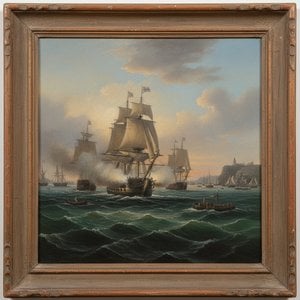
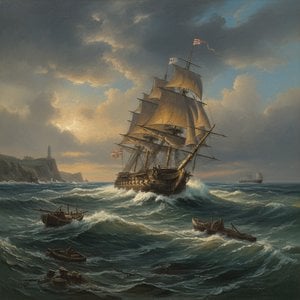
Initially, Birch followed in his father’s footsteps, focusing on portraiture. However, by 1807, a significant shift occurred in his artistic trajectory. Drawn to the drama and dynamism of maritime life, he turned his attention to marine painting, a genre that would define his career. This transition wasn't arbitrary; it reflected both a personal fascination with the sea and a growing national interest in naval power, particularly as tensions escalated leading up to the War of 1812. Birch’s early marine works reveal an evolving style, deeply influenced by the Dutch masters – Jacob van Ruisdael and Jan van Goyen foremost among them. He admired their meticulous attention to atmospheric perspective, their ability to capture the subtle nuances of light on water, and their overall sense of realism. But Birch wasn't simply imitating; he was synthesizing these European techniques with an emerging American sensibility, imbuing his paintings with a patriotic fervor that resonated with audiences eager for artistic expressions of national pride.
Naval Battles and National Identity
Birch’s name became synonymous with depictions of naval engagements during the War of 1812. His paintings weren't merely historical records; they were powerful visual narratives that celebrated American courage and resilience. USS United States and HMS Macedonian, perhaps his most famous work, immortalized a pivotal clash between American and British frigates. The painting’s dramatic composition, meticulous detail, and vibrant colors captured the intensity of battle while simultaneously conveying a sense of American triumph. Remarkably, this very canvas hung in the Oval Office during John F. Kennedy's presidency, a testament to its enduring symbolic power. Another significant work, Engagement Between the U.S. Frigate Constitution and the British Frigate Guerriere, further solidified his reputation as a master of marine painting. Beyond these iconic battle scenes, Birch also excelled at portraying tranquil harbor views and detailed ship portraits, showcasing his versatility and technical skill. He was, in essence, the first American artist to truly specialize in ship portraiture, setting a standard for accuracy and detail that would influence generations of artists to come.
Legacy and Lasting Influence
Thomas Birch’s contributions to American art are undeniable. He didn't just paint ships; he captured a moment in history, reflecting the nation’s growing confidence and its aspirations on the world stage. His work provided valuable documentation of naval engagements, offering insights into maritime life during a crucial period of American development. His paintings served as both historical records and powerful symbols of national identity. Birch's influence extended beyond his immediate contemporaries; he helped establish marine painting as a significant genre within the American artistic landscape, paving the way for later artists to explore the beauty and drama of the sea. His works are now held in prestigious museum collections across the country – including the Pennsylvania Academy of the Fine Arts, the Smithsonian American Art Museum, and the Museum of Fine Arts, Boston – ensuring that his legacy will continue to inspire and captivate audiences for years to come. Elected an honorary member of the National Academy of Design in 1833, Birch’s life and art stand as a testament to the power of artistic vision and its ability to shape our understanding of history and national identity.