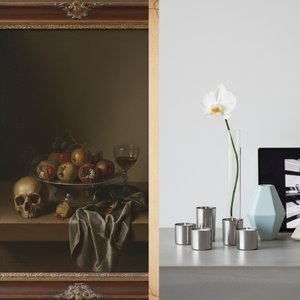
Pieter van Overschee: A Flemish Still Life Virtuoso of Antwerp’s Golden Age
Pieter van Overschee remains an enigmatic figure in the annals of Flemish Baroque art, shrouded in obscurity despite producing a remarkable body of work that captures the essence of Antwerp's artistic fervor during its zenith. Born sometime around 1640 – his precise birthplace and familial details stubbornly elusive – he emerged onto the artistic landscape as a ‘wijnmeester’ (son of a master) at the Guild of Saint Luke in Antwerp, marking him as the heir to a prestigious tradition of craftsmanship and patronage. Unlike many contemporaries who achieved renown through guild membership and public acclaim, van Overschee's career trajectory suggests a more solitary path, prioritizing artistic excellence over social visibility.
His father, Blasius van Oversee, was a prominent art dealer, providing him with invaluable exposure to the burgeoning Antwerp art market and fostering an appreciation for visual culture from a young age. This familial connection undoubtedly shaped his artistic sensibilities and instilled in him a dedication to mastering the techniques of still life painting – a genre particularly favored by Antwerp’s elite during the period. Records indicate that he was registered as a master of the guild sometime between September 18, 1640, and September 18, 1641, confirming his commitment to upholding the standards of artistic professionalism. However, there's no evidence suggesting he pursued ambitious commissions or sought recognition beyond the confines of Antwerp’s artistic circles.
Van Overschee’s oeuvre consists primarily of exquisitely rendered fruit still lifes and game still lifes—subjects that exemplify the Baroque preoccupation with materiality and sensual pleasure. His canvases are characterized by meticulous observation, masterful handling of light and shadow, and a subtle deployment of color palettes that convey both realism and symbolic resonance. Unlike some artists who favored grand narratives or allegorical representations, van Overschee focused on capturing fleeting moments of beauty—a single peach glistening in the afternoon sun, a pheasant perched atop a pile of feathers—transforming commonplace objects into vehicles for contemplation and artistic expression.
His stylistic influences are discernible in the works of Jan Brueghel III and Ambrosius Johannes Rembrandt van Rijn, artists who championed similar approaches to depicting nature and capturing human emotion. However, van Overschee’s distinctive vision distinguishes him from his peers—a quiet confidence in technique combined with a profound sensitivity to visual perception that elevates his paintings beyond mere imitation. He skillfully employed glazing techniques – applying thin layers of translucent paint over underlying colors – creating luminous surfaces that imbue his compositions with an ethereal quality. Furthermore, he demonstrated a remarkable understanding of perspective and spatial arrangement, convincingly conveying the illusion of depth and enhancing the dramatic impact of his scenes.
Despite the paucity of biographical information, van Overschee’s artistic legacy endures—primarily through surviving paintings housed in museums like the Museum Mayer van den Bergh and Gemeenlandshuis. These works stand as testament to Antwerp's flourishing Baroque art scene and offer invaluable insights into the aesthetic sensibilities of a lesser-known but undeniably gifted painter. His contribution to Flemish Baroque painting is recognized by scholars who appreciate his understated elegance, technical virtuosity, and unwavering devotion to capturing the sublime beauty of the natural world.
- Notable Paintings: “Still Life with Fruit,” “Game Still Life,” “Floral Still Life”
- Influences: Jan Brueghel III, Rembrandt van Rijn
- Techniques: Glazing, Perspective Rendering
Historical Significance: Pieter van Overschee embodies the spirit of Antwerp’s Golden Age—a period marked by artistic innovation, economic prosperity, and cultural dynamism. His paintings serve as poignant reminders of a bygone era when artists prioritized craftsmanship and aesthetic contemplation above all else. He represents an important voice in the Baroque tradition, demonstrating that profound beauty can be achieved through meticulous observation and subtle manipulation of visual elements.